
Services / Multi-Show Program Rollouts Across Atlanta's Convention Zones
Multi-Show Program Rollouts Across Atlanta's Convention Zones
Streamline your exhibit presence through Atlanta's expansive trade show circuit with comprehensive multi-show program rollouts that synchronize deployments from downtown flagships to suburban expos, ensuring consistent branding and operational efficiency across diverse venues like the Georgia World Congress Center, AmericasMart, and Gas South Convention Center.
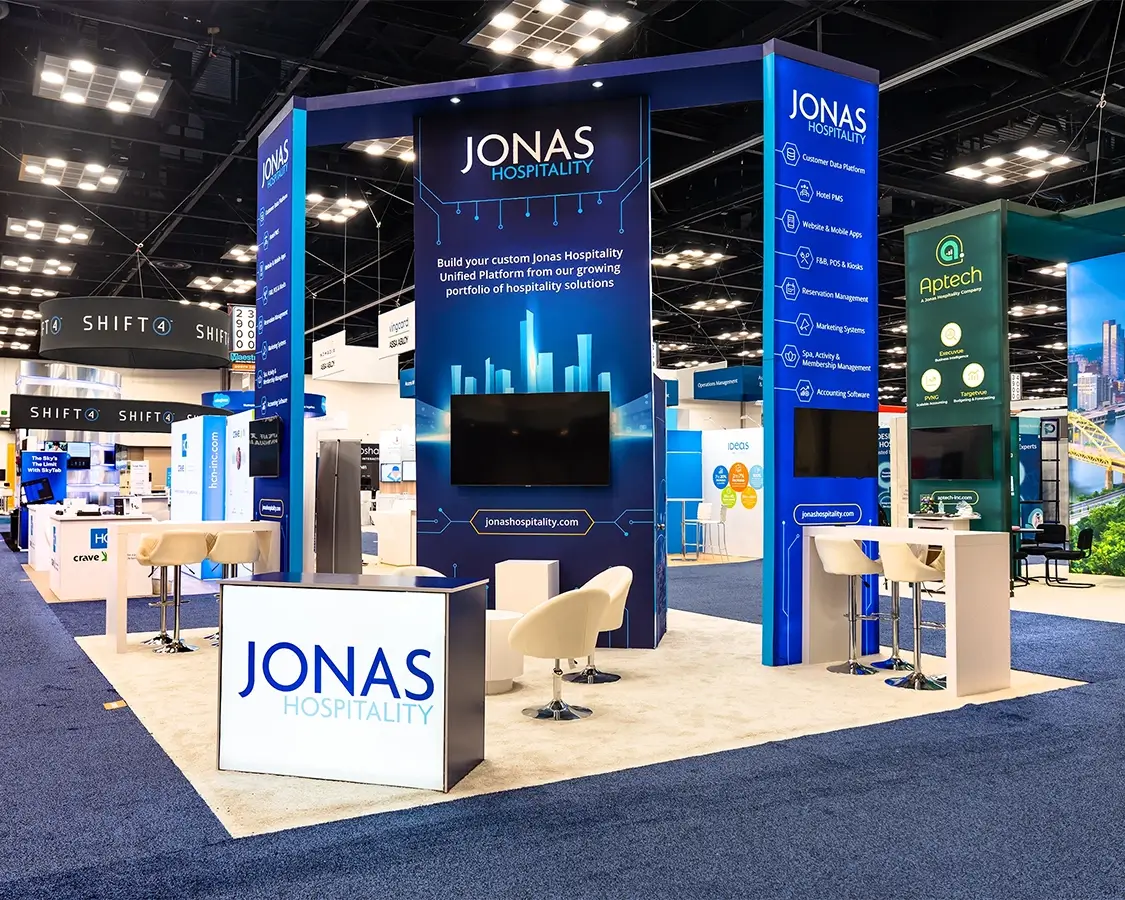
Downtown Atlanta Flagship Rollouts
The downtown Atlanta zone, encompassing the Georgia World Congress Center, Centennial Olympic Park, and AmericasMart Atlanta, forms the backbone of many multi-show programs due to its concentration of large-scale conventions, public activations, and buyer showroom events. Rollouts here begin with detailed mapping of exhibit footprints to accommodate the Georgia World Congress Center's expansive halls, which host simultaneous multi-day gatherings requiring phased installations to avoid cross-traffic disruptions. Programs replicate core display elements—like tension fabric structures and LED video walls—across these venues, ensuring that transitions from Georgia World Congress Center's convention floors to AmericasMart's market-week setups maintain identical sightlines and interactive zones despite differing ceiling heights and aisle configurations.
Centennial Olympic Park adds an outdoor activation layer to downtown rollouts, where weather-resilient rental kiosks and branding banners deploy alongside indoor exhibits, creating hybrid programs that extend booth reach into pedestrian flows near the Georgia World Congress Center. Coordination involves pre-show surveys of load-in bays at each site, aligning truck deliveries with AmericasMart's dedicated freight elevators and the park's ground-level access points to minimize dwell times. This zone's high demand for repeated executions justifies inventory pre-staging at neutral transfer points, facilitating 24-hour turnarounds between consecutive events.
Exhibit programs rolling through downtown benefit from standardized dismantle protocols that pack modular components into reusable crates sized for both Georgia World Congress Center's oversize freight doors and Centennial Olympic Park's compact haul routes. Ongoing monitoring ensures compliance with venue-specific fire safety setbacks and rigging capacities, particularly when scaling displays from AmericasMart's showroom pods to the Georgia World Congress Center's arena-adjacent halls.
Airport Corridor Fast-Turn Programs
Atlanta's airport and College Park corridor, highlighted by the Georgia International Convention Center and Gateway Center Arena, specializes in fly-in conferences and sports-adjacent activations that demand accelerated rollout paces. Multi-show programs here prioritize SkyTrain-compatible logistics, positioning rental displays for swift offloads from airport-adjacent parking to convention hall doors, often within hours of aircraft arrivals. The Georgia International Convention Center's floor plans support modular booth grids that mirror downtown setups, allowing smooth program extensions where exhibitors follow a Georgia World Congress Center debut with College Park follow-ups.
Gateway Center Arena introduces arena-style activations to these rollouts, integrating exhibit rentals with event seating risers and Back of House storage, ideal for programs blending trade show elements with live programming. Coordination accounts for the corridor's compressed timelines, scripting installs that complete before peak attendee rushes via ATL SkyTrain, while dismantles sync with post-event arena resets. This zone's role in multi-show circuits amplifies reach to transient audiences, with displays adapting from convention exhibit halls to arena perimeter zones without reconfiguration downtime.
Programs traversing the airport area emphasize resilient rental materials suited to high-traffic pathways, ensuring durability across repeated Gateway Center Arena footfalls and Georgia International Convention Center carpet transitions. Pre-programmed AV patches standardize tech handoffs, reducing setup variances between this corridor and suburban extensions.
Northwest Suburban Expansions at Cobb
The Cumberland and Cobb submarket, centered on the Cobb Convention Center, captures corporate events and regional trade shows that extend multi-show programs beyond downtown density. Rollouts here leverage the center's ballroom-driven layouts for intimate exhibit replications, where rental islands from AmericasMart showroom styles downscale to fit breakout session adjacencies. Scheduling aligns Cobb activations with northwest commuter patterns, positioning installs during off-peak windows to precede corporate buyer influxes from Atlanta's business districts.
Cobb Convention Center programs incorporate flexible partitioning systems from rental inventories, allowing dynamic space divisions that echo Georgia World Congress Center hall modularity on a smaller footprint. Logistics routes from downtown hubs navigate I-75 corridors efficiently, with crate consolidations minimizing transfer counts across the submarket. This zone's inclusion in rollouts diversifies program portfolios, balancing high-volume conventions with targeted regional engagements.
Exhibit continuity relies on graphic refresh kits that update messaging for Cobb's association-focused events, maintaining brand cohesion from previous downtown or airport stops. Venue-specific protocols, like ballroom AV tie-ins, integrate into master rollout playbooks for repeatable execution.
Northeast Gwinnett Corridor Completions
Duluth and Gwinnett's Gas South Convention Center rounds out Atlanta's multi-zone rollouts with community expos and association gatherings that demand cost-effective, high-impact exhibit presence. Programs culminating here repurpose downtown-originated rentals, adapting large-format structures to the center's expo halls via sectional breakdowns that fit standard overroad trucking from College Park or Cobb. Load-in coordination syncs with Gwinnett's peripheral access roads, avoiding peak-hour snarls while aligning with event calendars that often follow flagship shows.
Gas South's versatile floorplates support hybrid activations blending trade booths with community pavilions, extending program narratives from Georgia World Congress Center spectacles to localized interactions. Rollouts emphasize dismantle efficiencies, pre-packing for potential loops back to airport venues or storage rotations. This corridor's role ensures comprehensive metro coverage, capturing northeast demographics underserved by central clusters.
Sustainability in multi-show execution shines in Gwinnett, where reusable display frameworks reduce waste across repeated deployments, with inventory audits confirming compatibility with Gas South's eco-friendly guidelines.
Cross-Zone Logistics and Scheduling
Integrating Atlanta's four zones into cohesive multi-show rollouts requires master scheduling that overlays Georgia World Congress Center conventions, AmericasMart markets, College Park fly-ins, Cobb corporates, and Gas South expos. Timelines factor venue blackouts, like Georgia International Convention Center's pre-event holds, against downtown's continuous operations, creating buffer periods for inter-zone transports via optimized routes like I-85 and I-285.
Logistics hubs facilitate crate shuttles, consolidating rentals post-downtown dismantles for redistribution to suburban sites, with tracking systems monitoring dwell times at transfer points near ATL SkyTrain corridors. Programs build in contingency slots for weather delays at Centennial Olympic Park or arena overruns at Gateway Center Arena, ensuring downstream venues receive assets on spec.
Resource forecasting across zones pools AV, rigging, and display needs, standardizing specs for Georgia World Congress Center's high-bay requirements down to Cobb's ballroom limits.
Program Performance and Optimization
Tracking multi-show rollouts involves zone-specific KPIs, from Georgia World Congress Center lead volumes to Gas South engagement rates, aggregated into dashboards that inform iterative refinements. AmericasMart market-week metrics guide graphic evolutions for subsequent Cobb runs, while College Park foot traffic data calibrates booth adjacencies.
Optimization loops incorporate post-event debriefs, adjusting modular rentals for better flow in Gateway Center Arena perimeters or Centennial Olympic Park exposures. This data-driven approach sustains program longevity across Atlanta's circuit.
Scalability assessments prepare expansions, matching inventory depths to projected zone demands.
FAQ
How do multi-show programs handle venue differences in Atlanta?
Programs standardize modular rentals adaptable to Georgia World Congress Center halls, AmericasMart showrooms, Georgia International Convention Center floors, Cobb ballrooms, and Gas South expos, with custom mappings for each site's load-in, power, and setback rules.
What logistics support cross-zone rollouts?
Scheduling overlays event calendars, routing via I-75, I-85, and I-285, with SkyTrain-timed transfers for College Park and consolidated crates bridging downtown to suburbs.
Can programs include outdoor activations?
Yes, integrating Centennial Olympic Park kiosks with indoor exhibits at adjacent Georgia World Congress Center, using weather-resilient rentals for hybrid downtown extensions.
How are timelines managed for overlapping shows?
Phased installs and buffers account for blackouts at venues like Gateway Center Arena, ensuring assets cycle efficiently from flagships to regional follow-ups.
What metrics evaluate rollout success?
KPIs track leads, traffic, and engagement per zone, from AmericasMart buyer interactions to Gas South community metrics, fueling program tweaks.
Are rentals scalable for varying booth sizes?
Modular systems scale from large Georgia World Congress Center footprints to compact Cobb setups, with sectional breakdowns for Gwinnett transports.
Related topics
Compare the adjacent Atlanta topics.
Inquiry
Trade Show Displays of Atlanta
Atlanta trade show display programs shaped around venue realities, reusable systems, and cleaner show-floor execution.