
Venues / Centennial Olympic Park Activations
Centennial Olympic Park Activations
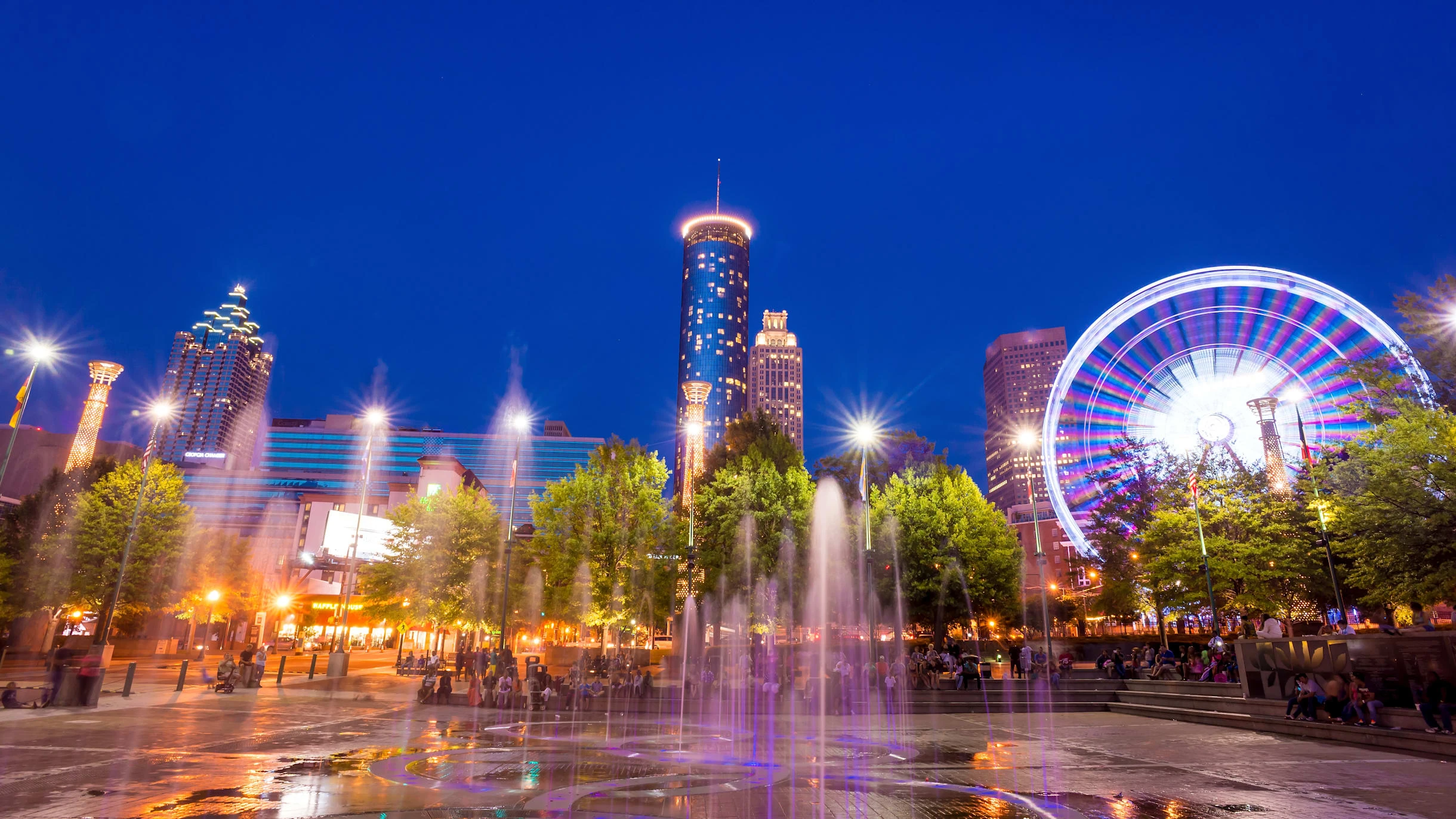
Strategic coordination for sponsor activations and branded environments within Atlanta’s iconic 22-acre downtown park, integrated with the GWCCA campus and surrounding convention infrastructure.
Position Within Atlanta’s Downtown Convention Ecosystem
Atlanta’s trade show and convention demand concentrates in four operational zones, with the downtown core led by the Georgia World Congress Center, Centennial Olympic Park, and AmericasMart Atlanta. This cluster generates the highest density of flagship exhibits, large-scale conventions, and public activations. Centennial Olympic Park supplies the outdoor dimension that allows branded experiences to extend beyond exhibit halls into a landscaped civic setting that draws both registered attendees and downtown foot traffic.
The park’s documented role in the GWCCA campus ecosystem makes it a strategic extension for exhibitors seeking measurable exposure during multi-day programs. Official planning resources from the GWCCA address outdoor logistics directly, providing the structural foundation for coordinating activations that maintain operational continuity with indoor sessions at neighboring facilities. This integration supports efficient load-in sequencing, shared infrastructure use, and unified attendee navigation across the district.
Unlike the fly-in orientation of the Georgia International Convention Center or the community-expo emphasis at Gas South, downtown park activations prioritize high-visibility sponsor presence within a nationally recognized urban landmark. The planning process therefore centers on synchronizing with peak convention periods rather than operating as a standalone destination.
Venue-Specific Attributes and Planning Nuances
Centennial Olympic Park is described by the GWCCA as an iconic 22-acre park embedded within the larger campus infrastructure. This scale demands activation designs that address spatial distribution, sight-line management, and durable material selection capable of withstanding variable weather while maintaining brand integrity. The dedicated outdoor section within the GWCCA planning guide supplies critical reference points for footprint allocation, electrical access, and crowd-flow modeling.
Effective coordination begins with mapping program elements against the park’s established pathways and gathering zones. Planners must account for the venue’s dual function as both event support space and daily public park, requiring activation boundaries that preserve pedestrian thoroughfares and comply with campus-wide operational standards. The planning guide’s outdoor coverage helps translate these constraints into actionable diagrams that prevent bottlenecks during peak attendance hours.
District differentiation appears clearly here. Airport venues such as the Gateway Center Arena emphasize rapid setup for fly-in audiences, whereas Centennial Olympic Park’s downtown location supports multi-day, layered programming that evolves with convention schedules. This nuance influences everything from graphics durability to staffing models and contingency timelines.
Coordinating Activations Across the Downtown Calendar
Successful programs at Centennial Olympic Park derive momentum from alignment with the downtown convention calendar rather than isolated scheduling. Peak periods at the Georgia World Congress Center create natural audience flow that outdoor activations can capture through targeted sponsor environments. Planning resources therefore focus on advance timeline mapping that coordinates with GWCC move-in, session blocks, and evening events to maximize exposure without disrupting campus operations.
Market-week and association-driven demand further shape activation strategy. The proximity to AmericasMart allows for complementary programming that bridges wholesale showroom activity with park-based experiential components. This layered approach requires detailed cross-venue coordination to ensure unified messaging, shared talent scheduling, and consistent attendee routing across the district.
The authoritative planning lens prioritizes measurable outcomes. By establishing clear traffic modeling and engagement protocols early, coordinators can demonstrate how park activations extend dwell time and enhance overall event ROI within Atlanta’s densest meetings corridor.
Custom Fabrication and Branded Environment Development
Fabrication for Centennial Olympic Park activations requires balancing visual impact with practical resilience. The 22-acre setting exposes structures to full environmental variables, making substrate selection, anchoring systems, and modular reusability central considerations. Planning documents stress the value of pre-approved connection points and standardized power distribution that maintain campus aesthetics while delivering sponsor objectives.
As a coordination resource, the focus remains on translating client brand platforms into environments that perform effectively at district scale. This includes graphic sizing calibrated for long-distance viewing, interactive components positioned for natural gathering, and structural elements engineered for rapid deployment and removal within tight campus changeover windows. The process draws directly from GWCCA outdoor planning references to avoid common pitfalls in public-space execution.
Nuance emerges in the distinction between park activations and traditional indoor exhibits. Outdoor programs often incorporate larger-scale sculptural elements and digital integration that leverage natural light cycles and nighttime illumination opportunities available in the downtown core.
Logistical Frameworks and Program Control
Program control at Centennial Olympic Park centers on disciplined sequencing within the GWCCA operational framework. Advance coordination with campus logistics teams ensures that activation elements arrive and depart according to published load schedules, minimizing disruption to concurrent indoor programs. The planning guide’s outdoor section supplies essential reference for permitted zones, height restrictions, and waste-management protocols that maintain the park’s civic standards.
District-level operational detail separates downtown park work from suburban venues. Cobb and Gwinnett facilities typically manage self-contained events with dedicated parking logistics, while Centennial Olympic Park operates within a pedestrian-heavy, multi-venue environment that demands tighter security perimeters and real-time crowd monitoring. These factors influence staffing ratios, material handling methods, and contingency communications.
Effective coordination resources maintain strict documentation trails that demonstrate compliance with all campus policies. This disciplined approach protects program timelines and supports the smooth attendee experience that downtown Atlanta’s convention cluster is known for delivering.
Measuring Activation Performance in Outdoor Settings
Performance metrics for Centennial Olympic Park programs extend beyond traditional booth traffic counts. The public nature of the 22-acre venue enables broader reach measurements including dwell time, social amplification, and crossover attendance from both convention and local audiences. Planning frameworks establish baseline data collection points at key park intersections and sponsor interaction zones to capture accurate engagement data.
Integration with the larger downtown cluster allows for comparative analysis against indoor exhibit performance at the Georgia World Congress Center. This holistic view helps organizers refine future activations by identifying which branded elements drive the strongest conversion from awareness to interaction within the outdoor environment. The GWCCA’s documented outdoor guidance provides consistent parameters for defining success within the campus ecosystem.
Long-term program control benefits from standardized reporting templates that track variables unique to public park activations. These include weather impact adjustments, peak-hour density mapping, and sponsor recall measurements taken after attendees leave the downtown district.
Strategic Differentiation from Other Atlanta Venues
Centennial Olympic Park represents the public activation core of the downtown zone, contrasting sharply with the airport-adjacent focus of the Georgia International Convention Center and Gateway Center Arena. While those venues optimize for fly-in convenience and rapid-turn programs near the SkyTrain, the park leverages its central location and civic landmark status to create memorable, shareable branded moments that reach both professional attendees and the broader Atlanta community.
Suburban venues in Cobb and Gwinnett capture regional corporate and consumer events with ample parking and self-contained campuses. Centennial Olympic Park instead operates as an extension of the flagship convention experience, where activations must harmonize with urban rhythms, pedestrian flows, and the architectural context of the Olympic legacy district. This requires planning approaches that prioritize contextual sensitivity over standalone scale.
The downtown cluster’s depth of demand makes Centennial Olympic Park an essential consideration for exhibitors seeking to amplify presence during major GWCC events. Understanding these district distinctions allows for more precise program design that matches activation style to venue character rather than applying uniform solutions across Atlanta’s diverse meeting infrastructure.
FAQ
How does Centennial Olympic Park connect to the Georgia World Congress Center for event programming?
The park forms an integrated component of the GWCCA campus, allowing activations to flow directly from indoor convention sessions into outdoor branded environments. Official planning guides address this connectivity with dedicated outdoor sections that outline shared logistics and attendee routing.
What makes the 22-acre park distinct from other Atlanta venues?
Its role as the public-facing outdoor hub within the downtown cluster differentiates it from enclosed airport or suburban facilities. The park supports sponsor activations that reach both convention audiences and daily civic traffic, requiring specialized coordination for visibility, durability, and public access.
Which types of programs perform best at Centennial Olympic Park?
Sponsor activations, branded experiential environments, and public engagement initiatives tied to larger GWCC or AmericasMart events deliver strongest results. The venue favors programs that capitalize on its landmark status and pedestrian density rather than self-contained trade show exhibits.
How far in advance should activation planning begin for this venue?
Coordination typically starts six to twelve months prior for major downtown conventions to align with published GWCCA campus calendars, permitting timelines, and outdoor space allocation windows detailed in official planning resources.
Does the park support digital or interactive branded elements?
Yes. Planning frameworks accommodate integrated digital displays and interactive components when calibrated to the outdoor environment and campus power infrastructure. GWCCA outdoor guidance provides parameters for technology deployment that respects the park setting.
How does planning for Centennial Olympic Park differ from suburban Atlanta venues?
Downtown park activations must navigate shared campus logistics, pedestrian flows, and public access requirements that suburban self-contained facilities do not face. The emphasis shifts toward civic integration and district-wide synchronization rather than independent event execution.
Related topics
Compare the adjacent Atlanta topics.
Inquiry
Trade Show Displays of Atlanta
Atlanta trade show display programs shaped around venue realities, reusable systems, and cleaner show-floor execution.