Locations / Old Fourth Ward Atlanta GA Trade Show Display Rental
Old Fourth Ward Atlanta GA Trade Show Display Rental
Strategic planning and coordination for trade show display rental that connects Old Fourth Ward with Atlanta's flagship convention infrastructure.
Atlanta Trade Show Geography and Old Fourth Ward Positioning
Atlanta's convention and trade show activity organizes around four practical operating zones that collectively address a wide range of corporate, association, consumer, and buyer-driven events. Downtown Atlanta constitutes the flagship zone due to the concentrated presence of major facilities that generate the highest volume of exhibit hall utilization, public activations, and industry showroom traffic. The Georgia World Congress Center stands as the cornerstone with its extensive square footage and detailed operational infrastructure, while Centennial Olympic Park supports large-scale experiential campaigns and AmericasMart delivers critical market programming that draws national and international attendees.
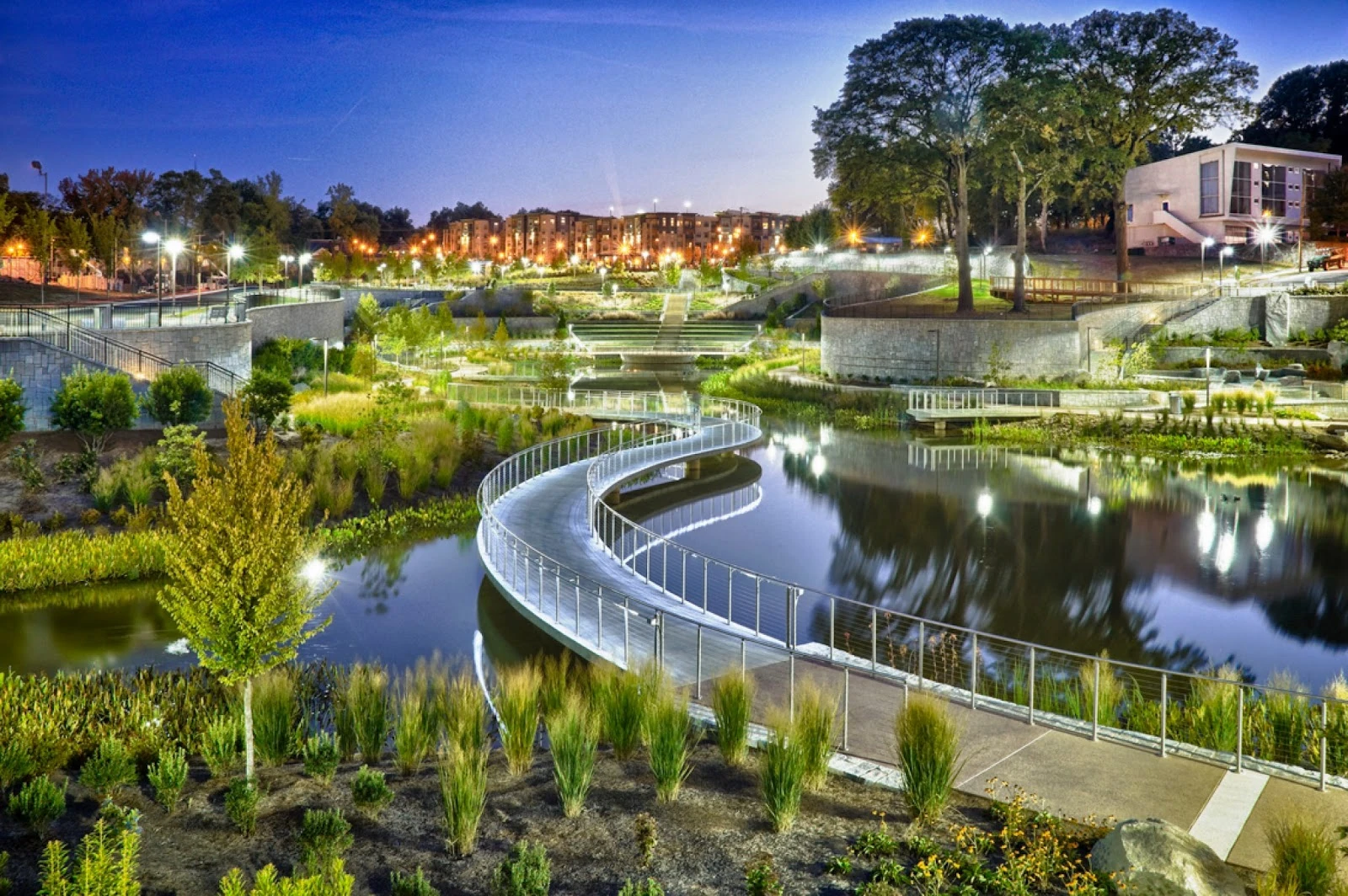
Old Fourth Ward operates as a secondary but strategically valuable district adjacent to this downtown core. Its creative energy and mixed-use development patterns enable exhibitors to develop supplementary programs that extend the impact of primary venue participation. Rather than functioning in isolation, the district enhances multi-day event strategies by providing settings suitable for hospitality suites, pop-up demonstrations, or targeted networking that align with broader show objectives. Planning therefore begins with mapping how district activities can reinforce messages delivered within the Georgia World Congress Center or during AmericasMart market days.
Effective coordination requires recognition that demand in the downtown zone frequently spills into surrounding districts. Rental display selections must accommodate both the rigid technical requirements of convention facilities and the more flexible, audience-engagement needs that arise in neighborhood contexts. This integrated approach prevents fragmentation and ensures brand consistency across the full spectrum of Atlanta event environments.
Flagship Venues and Their Operational Relationship to Old Fourth Ward
The Georgia World Congress Center provides the foundational infrastructure for Atlanta's largest conventions, with its planning guide detailing critical specifications for booth construction, loading dock procedures, electrical distribution, rigging points, and move-in/move-out timelines. These documented parameters form the baseline for any coordinated rental program that also incorporates Old Fourth Ward extensions. Proximity between the facility and the district allows exhibitors to maintain efficient schedules when shifting between formal exhibit halls and secondary activations without introducing excessive logistical complexity.
Centennial Olympic Park functions as a premier outdoor and activation venue frequently programmed in conjunction with indoor conventions, creating demand for rental displays that transition smoothly between controlled interior environments and public park settings. Similarly, AmericasMart's role as a permanent showroom and temporary market destination generates cyclical demand for supplementary exhibit elements that can be deployed in nearby district locations to capture buyer traffic during key event windows.
Coordination resources reference these venue characteristics to develop unified strategies. Rental inventory is selected not only for visual impact but also for compliance with the strictest applicable standards published in facility guides. This approach ensures that programs originating in Old Fourth Ward can scale upward to meet the demands of the flagship venues or contract to support more intimate district engagements.
Airport Adjacent and Suburban Zone Coordination
The airport and College Park corridor represents a second major operational zone deliberately engineered around fly-in convenience. The Georgia International Convention Center offers substantial exhibit space with floor plans optimized for both association conferences and consumer shows, while the Gateway Center Arena at College Park supports sports-entertainment hybrids and large-scale corporate events. Both facilities connect directly to Hartsfield-Jackson Atlanta International Airport through the ATL SkyTrain, reducing transportation friction for national exhibitors who may also schedule Old Fourth Ward components.
Further from the urban core, the Cobb Convention Center in the northwest and Gas South Convention Center in the northeast capture demand that does not require downtown density. These suburban venues host events with distinct attendee profiles ranging from technology-focused corporate meetings to regional community expos. Planning for Old Fourth Ward-based programs must therefore incorporate visibility across all four zones to maximize market coverage rather than concentrating exclusively on any single submarket.
Turnkey rental coordination simplifies multi-zone execution by providing inventory that performs consistently whether installed at the GICC, Cobb Galleria, or in support of district programming near the downtown core. This flexibility allows exhibitors to deploy the same brand assets across varied environments while adjusting only the scale and supplementary elements to match specific venue footprints and audience expectations.
Rental Display Strategies for Mixed Environment Programs
Rental display solutions for Old Fourth Ward and greater Atlanta events prioritize modularity and adaptability to accommodate the technical specifications of the Georgia World Congress Center alongside the experiential requirements of district or park activations. Inline configurations suit space-constrained convention booths while island exhibits deliver higher visibility for key product launches. The same modular components can be reconfigured with different graphic applications or lighting packages to match the aesthetic tone of Old Fourth Ward settings without requiring entirely new fabrication.
Material choices, structural integrity standards, and graphic durability must satisfy the most rigorous requirements outlined in official venue planning documents while still supporting creative applications suitable for neighborhood engagements. Rental approaches eliminate the need for long-term capital investment in custom assets that may only be used during specific Atlanta market windows, allowing exhibitors to allocate budget toward programming, staffing, and measurement instead.
Coordination frameworks emphasize early selection of rental inventory based on confirmed event calendars at both primary venues and secondary district locations. This proactive step prevents last-minute adjustments and ensures that all components arrive with appropriate labor and installation protocols already aligned to each facility's published guidelines.
Timeline Development and Operational Best Practices
Atlanta's convention calendar features overlapping peaks, particularly during AmericasMart market weeks and major GWCC citywide events. Detailed timeline construction must therefore incorporate buffer periods for transportation between the airport zone, downtown facilities, suburban centers, and Old Fourth Ward locations. Reference to the GWCC planning guide supplies critical data points on advance deadlines, installation windows, and dismantle schedules that inform the entire program architecture.
Successful coordination extends beyond physical displays to encompass pre-event strategy alignment, real-time adjustment protocols during multi-venue days, and post-event debriefs that capture lessons for future cycles. Attention to these operational layers helps exhibitors avoid conflicts that arise when major facilities operate at capacity simultaneously. Rental partners supply the frameworks necessary to maintain schedule integrity across zones with differing load-in requirements and audience flow patterns.
Documentation of each venue's specific procedures creates a single source of truth for all stakeholders. When Old Fourth Ward components are included, additional consideration is given to local traffic patterns, parking logistics, and timing that complements rather than competes with primary venue schedules. The resulting program achieves both efficiency and flexibility.
Strategic Integration of District and Convention Programs
The most effective Atlanta trade show strategies treat Old Fourth Ward not as a standalone market but as an integrated extension of downtown flagship activity. Primary exhibits at the Georgia World Congress Center or AmericasMart can be supported by targeted district activations that allow deeper interaction with key prospects in a less formal environment. Rental displays selected for this dual purpose maintain visual and messaging continuity while adapting scale to each setting.
This integrated model captures the full breadth of Atlanta demand drivers, from international buyers attending market weeks to regional associations using suburban facilities and corporate teams leveraging airport convenience. Planning resources help exhibitors map these opportunities against their specific objectives, whether focused on lead volume, brand awareness, or relationship development. The secondary district positioning of Old Fourth Ward adds depth without requiring separate custom fabrication for each environment.
Continuous evaluation of performance data across zones allows refinement of rental selections and deployment tactics over multiple cycles. Atlanta's role as a national convention destination rewards organizations that develop sophisticated, multi-venue approaches rather than isolated single-facility participation. Coordination frameworks simplify the complexity inherent in such programs.
Venue Documentation and Compliance Frameworks
Official planning materials from the Georgia World Congress Center, Georgia International Convention Center, and related facilities establish non-negotiable parameters for exhibit construction, material flammability, electrical draw, and structural loading. These documents serve as the foundation for any compliant rental program that spans downtown, airport, and suburban zones while incorporating Old Fourth Ward elements. Early review prevents costly revisions during installation windows.
Coordination resources translate these technical requirements into practical selection criteria for rental inventory. Displays are vetted against the most restrictive standards likely to apply during a multi-venue program, ensuring smooth movement between locations. This diligence becomes particularly important when events coincide with peak periods that strain both facility staff and available labor resources across the metro area.
The resulting compliance framework gives exhibitors confidence that their programs will proceed without interruption regardless of primary venue or supporting district location. Atlanta's diverse venue mix rewards thorough preparation grounded in published documentation rather than assumptions about operational flexibility.
FAQ
How does Old Fourth Ward relate to Atlanta's primary convention venues?
Old Fourth Ward operates as a secondary district adjacent to the downtown flagship zone. It provides complementary settings for activations and engagements that support major programs at the Georgia World Congress Center, Centennial Olympic Park, and AmericasMart without replacing the core exhibit functions of those facilities.
What are the four operational zones for Atlanta trade shows?
Atlanta trade show demand divides into downtown Atlanta as the flagship, the airport and College Park corridor for fly-in convenience, the Cumberland and Cobb submarket for northwest events, and the Duluth and Gwinnett corridor for northeast demand. Each zone serves distinct segments while allowing coordinated rental programs to span multiple areas.
Which venues anchor Atlanta's downtown convention cluster?
The downtown flagship zone is led by the Georgia World Congress Center with its extensive planning documentation, Centennial Olympic Park for large-scale activations, and AmericasMart for buyer showroom and market programming. These create the deepest concentration of exhibit and engagement demand in the metro area.
Why is rental coordination emphasized for multi-zone Atlanta programs?
Rental coordination ensures consistent brand presentation and operational efficiency when exhibits move between downtown flagship venues, airport-adjacent facilities such as the GICC and Gateway Center Arena, and suburban centers like those in Cobb and Gwinnett. Modular inventory simplifies transitions while adhering to each location's documented requirements.
What planning resources support effective exhibit execution in Atlanta?
Official documentation including the GWCC planning guide supplies detailed specifications on floor plans, load-in procedures, electrical needs, and rigging that inform rental selections and timelines. These resources enable coordinated strategies that integrate Old Fourth Ward extensions with primary venue programs.
How should exhibitors approach Atlanta market calendar overlaps?
Exhibitors should develop timelines that account for concurrent activity at AmericasMart, the Georgia World Congress Center, and suburban venues by building in appropriate buffers and prioritizing modular rental solutions. Early reference to published venue guides helps prevent scheduling conflicts across zones.
Related topics
Compare the adjacent Atlanta topics.
Inquiry
Trade Show Displays of Atlanta
Atlanta trade show display programs shaped around venue realities, reusable systems, and cleaner show-floor execution.