
Locations / Trade Show Planning and Exhibit Coordination for Lawrenceville, GA
Trade Show Planning and Exhibit Coordination for Lawrenceville, GA
Strategic guidance for organizations in Lawrenceville and the Gwinnett corridor to navigate Atlanta's multi-zone trade show landscape with precision and purpose.
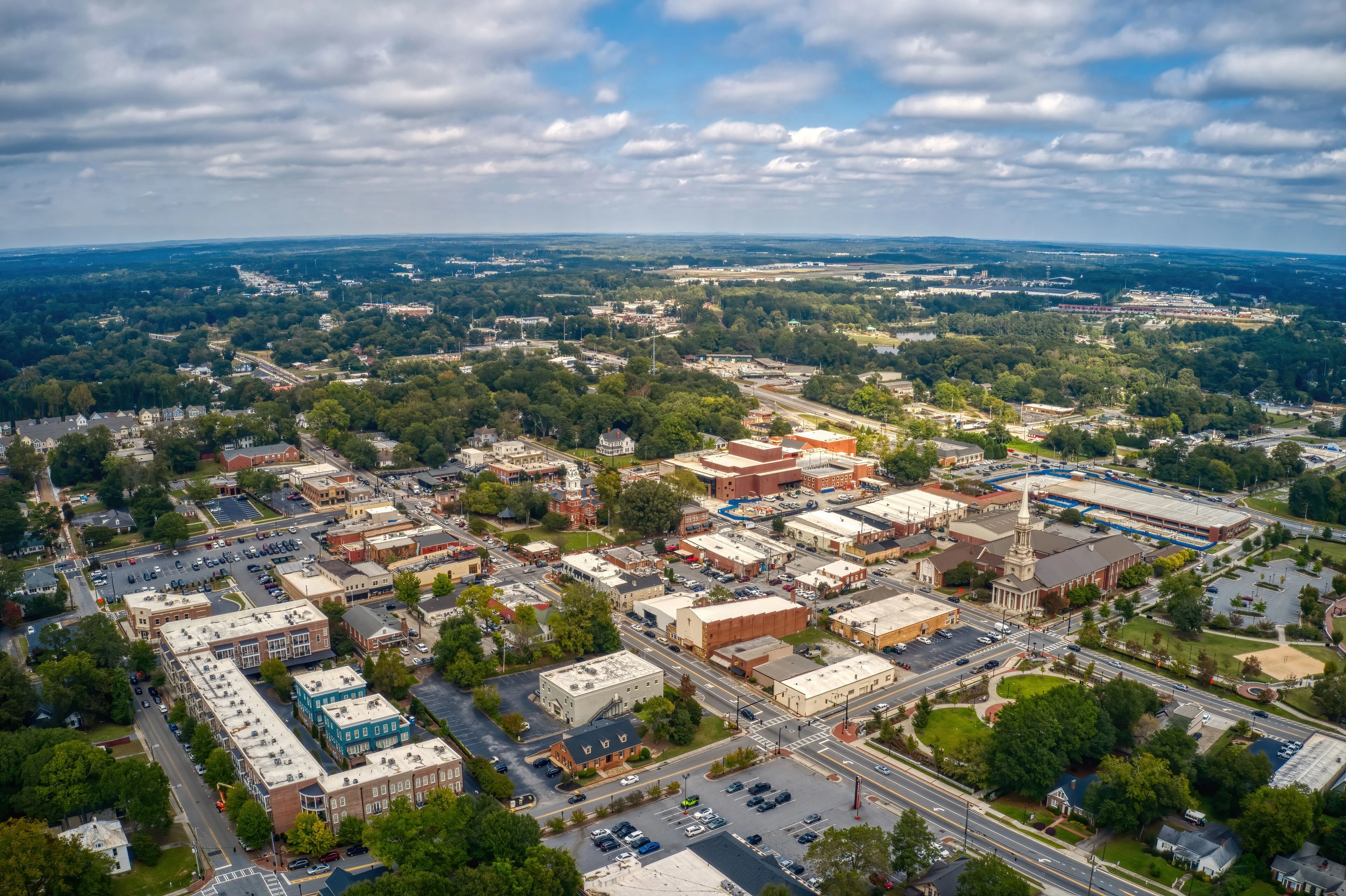
Lawrenceville Within Atlanta's Four-Zone Trade Show Framework
The Atlanta market operates through clearly delineated zones that shape how events are planned and executed. Downtown Atlanta functions as the flagship convention hub, where the Georgia World Congress Center, Centennial Olympic Park, and AmericasMart generate dense clusters of exhibit demand, buyer showrooms, and large-scale activations. In contrast, the airport and College Park corridor prioritizes fly-in convenience through facilities positioned around ATL SkyTrain access, making it ideal for time-sensitive national and international attendees.
Northwest suburban venues centered on the Cobb Convention Center and northeast suburban venues such as those in the Duluth and Gwinnett corridor address demand that does not require downtown density. Lawrenceville, located in Gwinnett County, benefits from this northeast alignment, where events frequently feature corporate training components, regional association meetings, and community expos that favor targeted engagement over sheer volume. This suburban character influences everything from booth sizing to content delivery, requiring planners to adjust for audiences that may include more local decision-makers and longer dwell times.
Successful programs originating from or targeting Lawrenceville therefore treat the city as a coordination node rather than an isolated market. Plans must account for travel patterns between the northeast corridor and downtown or airport zones, ensuring that exhibit assets remain flexible enough to transition between venue types while preserving structural integrity and brand consistency. This zonal awareness prevents overcommitment to any single location and supports scalable campaign architectures.
Documentation from major Atlanta venues underscores the importance of early planning. The Georgia World Congress Center's planning resources, for instance, highlight the need for precise load-in and load-out sequencing that suburban coordinators must anticipate when linking multiple events into a single annual program.
Venue Considerations Across the Northeast Corridor and Beyond
While Lawrenceville itself hosts local business functions, the practical radius for trade show activity extends to purpose-built facilities in the immediate Gwinnett area and throughout greater Atlanta. The Gas South Convention Center in nearby Duluth serves as a primary northeast suburban anchor, accommodating mid-scale exhibits, conferences, and public events that align with the demographic and operational profile of Gwinnett County organizations. Its layout supports both theater-style presentations and booth-based exhibitions, requiring planners to evaluate traffic flow and sight lines unique to suburban campuses.
Coordinating with downtown venues adds another layer of complexity. The Georgia World Congress Center offers over 3.9 million square feet of exhibit space across multiple halls, with documented planning guides that detail rigging points, electrical specifications, and ADA compliance requirements. Exhibitors based in Lawrenceville must synchronize their schedules with these downtown cycles, often using the suburban events as lead-generation platforms that feed into larger downtown activations later in the calendar year.
Airport-adjacent options such as the Georgia International Convention Center and Gateway Center Arena provide additional flexibility. These venues emphasize logistical simplicity through direct SkyTrain connections and dedicated attendee parking, characteristics that influence how exhibits are engineered for quick setup and rapid reconfiguration. Planners working from Lawrenceville therefore develop asset specifications that accommodate the dimensional and technical differences between these airport facilities and the more expansive downtown or suburban expo halls.
Each venue cluster presents distinct operational details. Floor plans, ceiling heights, and access protocols vary significantly, making advance review of technical manuals essential. The resulting exhibit solutions must balance visual impact with practical adaptability, ensuring components can be reconfigured without compromising structural standards established across Atlanta's convention infrastructure.
Exhibit Design Nuances for Suburban Versus Downtown Audiences
Audience expectations shift noticeably between downtown Atlanta's high-velocity environment and the more relationship-oriented gatherings common in the Gwinnett corridor. Lawrenceville-area events often attract regional stakeholders who value detailed product demonstrations and extended consultation time rather than rapid brand impressions. This favors modular designs that incorporate interactive zones, storage for collateral, and configurable lighting suitable for both bright daytime sessions and evening networking functions.
Downtown programs at AmericasMart or the Georgia World Congress Center, by comparison, operate within tighter schedules and higher foot traffic, necessitating bolder graphics, streamlined queuing systems, and technology integrations that deliver information quickly. Effective coordination resources help Lawrenceville organizations bridge these differences by creating core exhibit platforms that accept interchangeable components tailored to each zone's specific demands.
Material selection also reflects operational realities. Fabrics, laminates, and hardware must withstand repeated transport between northeast suburban sites and downtown or airport venues while maintaining appearance standards. Planning at this level incorporates testing protocols for durability, weight distribution, and tool-free assembly that reduce on-site complications across Atlanta's varied facility types.
District-level differentiation further informs design. Lawrenceville's blend of historic downtown charm and rapid business growth creates an expectation for exhibits that communicate both established reliability and forward-looking innovation. Programs that successfully balance these attributes tend to perform strongly in Gwinnett events while remaining appropriate for downtown showcases.
Logistics and Timeline Coordination for Multi-Zone Campaigns
Orchestrating a successful exhibit program that spans Lawrenceville-area events and downtown or airport venues requires meticulous timeline construction. The Georgia World Congress Center planning materials emphasize advance submission of renderings, electrical plans, and labor estimates, timelines that must be back-scheduled from suburban event dates to maintain asset availability. Coordination frameworks therefore treat the entire Atlanta metro as a single ecosystem rather than separate markets.
Transportation sequencing becomes critical when moving assets between the northeast corridor and College Park or Cobb facilities. Factors such as I-85 and I-285 traffic patterns, permitted load-in windows, and storage duration limits must be modeled during initial planning phases. Resources that map these constraints help prevent scheduling conflicts that could compromise participation in sequential shows.
Budget frameworks gain precision when viewed through the zonal lens. Suburban events in Gwinnett often allow for larger footprints at lower Per Square Foot costs, while downtown activations command premium pricing for prime hall locations. Planning models that allocate resources proportionally across these environments produce more accurate forecasts and reduce the likelihood of mid-campaign adjustments.
Measurement protocols complete the operational loop. By establishing consistent metrics for lead volume, engagement duration, and post-event conversion across all zones, Lawrenceville organizations can evaluate true program effectiveness rather than isolated event outcomes. This data-driven approach informs future planning cycles and supports continuous refinement of both design and coordination strategies.
Association and Corporate Event Patterns in the Gwinnett Corridor
The northeast Atlanta sector demonstrates particular strength in hosting association conferences, corporate training summits, and regional industry days. These events typically feature tighter attendee lists than downtown mega-shows, creating opportunities for deeper conversations that reward exhibit designs emphasizing consultation spaces and interactive product experiences. Lawrenceville businesses frequently leverage these gatherings to strengthen relationships within specific verticals before expanding presence at larger downtown conventions.
Corporate events in the corridor often align with product launch windows or regional sales initiatives. Planning must therefore incorporate branding consistency with national campaigns while allowing for localized messaging that resonates with Gwinnett decision-makers. This dual-layer approach requires early alignment between marketing, sales, and exhibit coordination teams to ensure all touchpoints reinforce the same strategic objectives.
Community-oriented expos common to the area introduce yet another planning variable. These events blend commercial objectives with public education and often operate under different labor and material restrictions than professional conventions. Authoritative coordination guidance helps organizations navigate these distinctions without disrupting overarching program continuity.
Seasonal patterns also influence strategy. Many Gwinnett events cluster in spring and fall to avoid summer humidity and winter holiday conflicts, creating predictable windows that experienced planners use to secure preferred booth locations and coordinate asset maintenance schedules.
Building a Scalable Atlanta-Wide Exhibit Program from Lawrenceville
Organizations headquartered in Lawrenceville gain strategic advantage by treating the city as a planning hub for broader Atlanta activity rather than a standalone market. This perspective encourages development of core exhibit platforms that accept zone-specific modifications, reducing long-term fabrication costs while maintaining quality standards across venues. The approach also simplifies inventory management by creating predictable refurbishment and storage cycles.
Integration with digital campaign elements further amplifies effectiveness. When physical exhibits are planned in tandem with virtual components and follow-up automation, Lawrenceville organizations can extend event impact well beyond move-out dates. Coordination resources that emphasize this holistic view help bridge the gap between suburban event outcomes and downtown or airport-driven pipeline development.
Regulatory compliance represents another critical planning dimension. Georgia-specific guidelines regarding flammability, electrical safety, and accessibility must be verified against each venue's individual requirements. Maintaining a centralized compliance repository prevents last-minute issues that could affect participation across multiple zones.
The end result is a resilient program architecture that accommodates both planned annual events and opportunistic additions. By grounding decisions in the documented characteristics of Atlanta's convention infrastructure, Lawrenceville-based teams position themselves to compete effectively regardless of where individual shows occur within the metro region.
Performance Measurement and Continuous Program Refinement
Effective exhibit coordination extends beyond installation to encompass rigorous performance analysis. Metrics collected at Gas South events, downtown conventions, and airport venues should be normalized to allow direct comparison, revealing which zones deliver the strongest outcomes for specific objectives. Lawrenceville organizations benefit from this zonal analysis by reallocating resources toward high-performing segments while adjusting underperforming elements.
Technology integrations now enable real-time engagement tracking that supplements traditional lead forms. When combined with post-event survey data and sales pipeline attribution, these tools create comprehensive pictures of program contribution. Planning frameworks that embed measurement from the conceptual stage produce more actionable insights than those added as afterthoughts.
Annual reviews of the entire Atlanta program allow for incremental improvements in design, messaging, and logistics. Insights gained from one year's Gwinnett corridor activity can inform downtown booth configurations the following season, creating a virtuous cycle of refinement that strengthens overall market presence.
This disciplined approach to measurement distinguishes strategic exhibit programs from transactional participation. Organizations that invest in coordinated planning across Lawrenceville and the wider Atlanta ecosystem consistently report stronger brand recall, higher quality leads, and improved return on exhibition investment.
FAQ
How does Lawrenceville fit into Atlanta's overall trade show market?
Lawrenceville operates as part of the Duluth and Gwinnett northeast suburban corridor, one of four primary zones that also include downtown Atlanta, the airport and College Park area, and the Cobb northwest submarket. This positioning supports both local suburban events and coordinated participation in downtown and airport venues.
What are the major venues relevant to Lawrenceville-based exhibitors?
Key facilities include the Gas South Convention Center in the immediate Gwinnett corridor, the Georgia World Congress Center and AmericasMart downtown, the Georgia International Convention Center and Gateway Center Arena near the airport, and the Cobb Convention Center to the northwest. Each presents distinct operational requirements that must be addressed during planning.
Why is zonal planning important for Lawrenceville organizations?
Each of Atlanta's four zones attracts different attendee profiles and operates under unique logistical conditions. Suburban events in Gwinnett tend to support longer consultations while downtown shows emphasize rapid impressions. Coordinated planning ensures exhibit assets and messaging remain effective across all environments.
How far in advance should Lawrenceville exhibitors begin planning?
Planning timelines vary by event scale but typically begin 9 to 18 months ahead for major downtown conventions and 6 to 12 months for suburban Gwinnett events. Early coordination allows alignment with venue planning guides and prevents conflicts across multiple shows in the annual calendar.
What design considerations matter most for the Gwinnett corridor?
Exhibits for northeast suburban events often benefit from interactive demonstration areas, flexible seating for consultations, and lighting suitable for both daytime and evening use. These elements should remain compatible with the stricter spatial and technical requirements of downtown venues.
How can organizations measure success across Atlanta zones?
Consistent metrics such as qualified lead volume, engagement duration, and pipeline conversion should be tracked at every event. Normalizing data across downtown, airport, Cobb, and Gwinnett venues reveals which environments best support specific objectives and informs future resource allocation.
Related topics
Compare the adjacent Atlanta topics.
Inquiry
Trade Show Displays of Atlanta
Atlanta trade show display programs shaped around venue realities, reusable systems, and cleaner show-floor execution.